Core Web Vitals Optimization
Pretty designs don't rank. Fast ones do.
We engineer LCP, INP, and CLS into Google's "Good" range so your site ranks higher on Google, gets cited by ChatGPT and Perplexity, and converts more visitors on mobile.
Not sure which plan you need, book a consultation
Use our interactive Service Builder to combine web design, SEO, AEO, and automation into a plan tailored to your business.
If Your Site Takes 3 Seconds to Load, Half Your Visitors Are Already Gone.
Google Doesn't Rank Slow Sites — It Buries Them.
Core Web Vitals Are the New SEO Ground Floor.
Pretty Designs Don't Rank. Fast Ones Do.
A 1-Second Delay Costs You 7% of Conversions. Every Time.
Mobile Users Won't Wait. Mobile-First Indexing Won't Either.
Layout Shifts Look Cheap and Cost You Trust.
Every Bloated Plugin Is a Ranking You're Giving Away.
AI Search Rewards the Same Thing Google Does: Speed and Stability.
If It Doesn't Pass Core Web Vitals, It Doesn't Compete.
Why Core Web Vitals Decide Who Ranks
Core Web Vitals are Google's official user-experience scorecard — and they're a confirmed ranking factor. In competitive niches, they're the tiebreaker between position 3 and position 13.
AI search engines like ChatGPT, Perplexity, and Google AI Mode prioritize the same thing: fast, stable pages they can crawl and parse cleanly. Slow pages time out during crawl and never get cited.
And it's not just SEO. A 1-second delay costs an average of 7% in conversions. Speed is the highest-ROI engineering work most sites are ignoring.
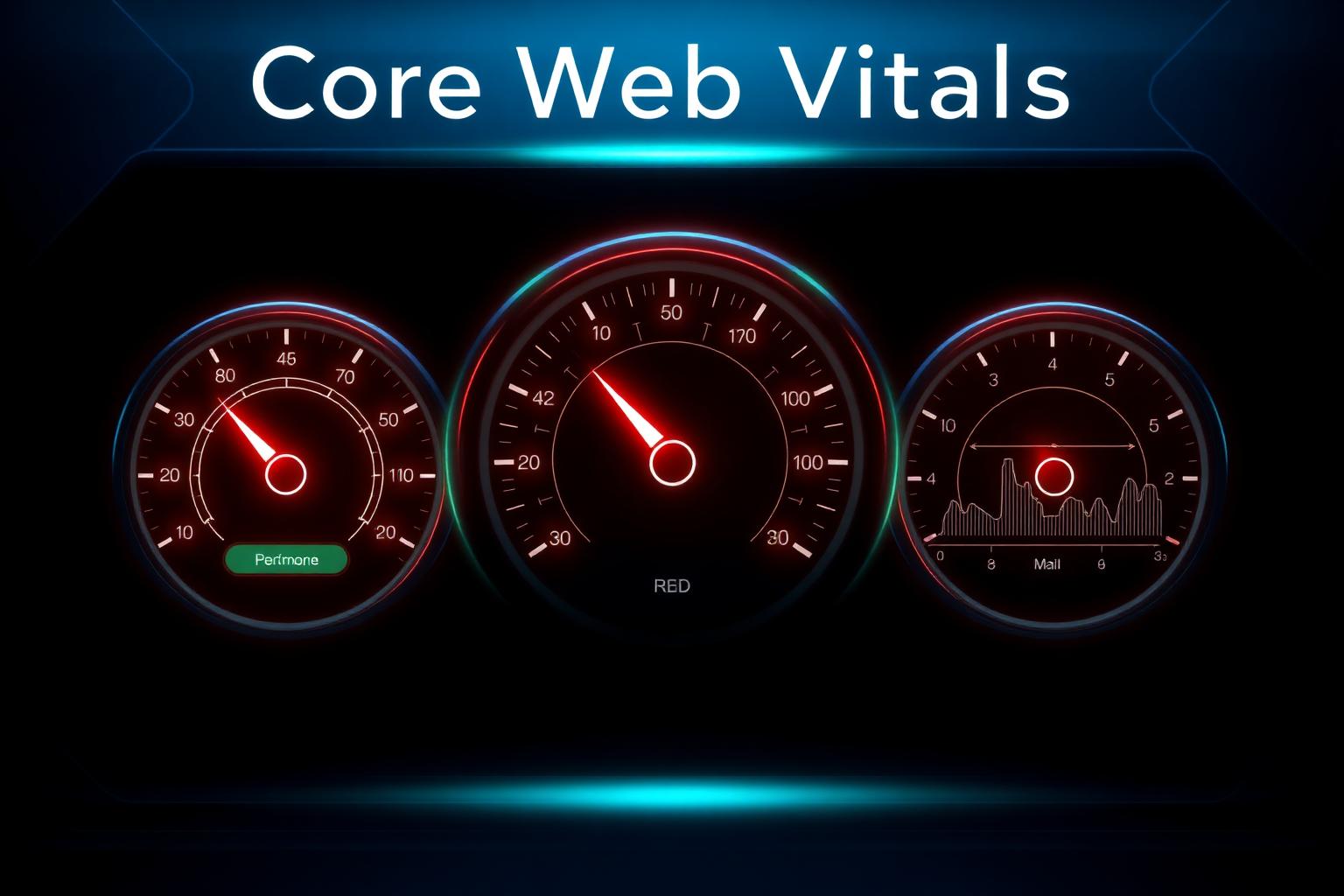
The Three Core Web Vitals
Loading. Responsiveness. Stability. Pass all three on mobile, or you don't compete.
Largest Contentful Paint
Target: Under 2.5s
How fast the biggest visible element (hero image, headline, video) finishes loading. The single strongest perception-of-speed signal Google uses.
Interaction to Next Paint
Target: Under 200ms
How quickly your page responds to a tap, click, or keypress. Replaced FID in 2024 as the official responsiveness metric.
Cumulative Layout Shift
Target: Under 0.1
How much your layout jumps around as it loads. Shifting buttons, late-loading ads, and pop-ins kill trust — and ranking.
Supporting Metrics We Also Tune
TTFB — Time to First Byte
Server and hosting responsiveness. Bad TTFB makes every other metric worse.
FCP — First Contentful Paint
When the first pixel of content paints. Predictor of LCP and perceived load.
TBT — Total Blocking Time
How long the main thread is locked by JavaScript. Predictor of INP issues.
Failing vs. Passing Core Web Vitals
What it costs you — and what it earns you.
| Metric | Failing | Passing |
|---|---|---|
| LCP target | 4.0s+ (poor) | Under 2.5s (good) |
| INP target | 500ms+ (poor) | Under 200ms (good) |
| CLS target | 0.25+ (poor) | Under 0.1 (good) |
| Mobile bounce rate | Up to 90% above 5s | Cut in half under 2s |
| Conversion impact | −7% per second of delay | +1–2% per 100ms saved |
| Google ranking | Buried below faster competitors | Eligible for top-3 placement |
| AI engine citations | Often skipped during crawl | Crawled, indexed, cited |
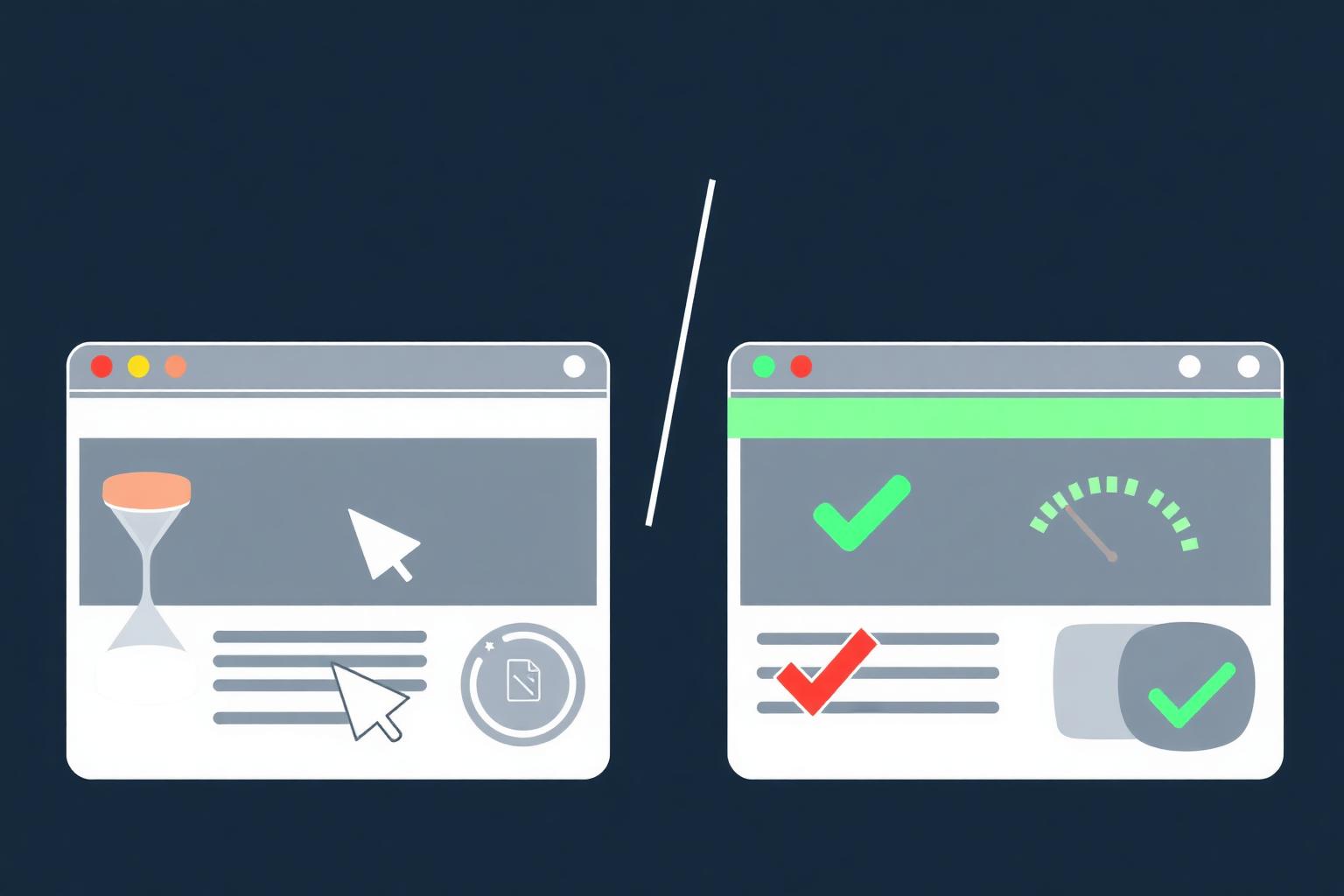
Same content. Different engineering. Completely different rankings.
What We Actually Optimize
The engineering work behind every "Good" score.
Image Optimization
Convert to AVIF/WebP, generate responsive srcsets, lazy-load below the fold, and preload your LCP image. Average savings: 60–80% bytes.
JavaScript Diet
Code-split, tree-shake, defer non-critical scripts, kill unused libraries. Less main-thread work means lower INP and TBT.
Critical CSS
Inline above-the-fold styles, defer the rest. Eliminates render-blocking and dramatically improves FCP and LCP.
Server & CDN Tuning
Edge caching, HTTP/3, Brotli compression, and a real CDN cut TTFB to under 200ms globally.
Layout Stability
Reserve space for images, ads, and embeds. Lock font swap behavior. Eliminate every measurable layout shift.
Mobile-First Pass
All optimizations validated on real mid-tier mobile hardware — because that's exactly what Google measures.
Our 6-Step Core Web Vitals Process
Audit. Diagnose. Fix. Validate. Defend.
Real-User Audit
We pull your actual Chrome User Experience Report (CrUX) data plus Lighthouse, WebPageTest, and PageSpeed Insights. We measure what real visitors experience, not synthetic guesses.
Diagnose the Bottlenecks
Render-blocking scripts, oversized hero images, layout shifts, third-party tag bloat, slow TTFB — every metric traced to its root cause.
Prioritize by ROI
Fix the issues that move LCP, INP, and CLS the most for the least effort first. We share the plan before we touch a line of code.
Implement Optimizations
Image pipeline, JS code-splitting, critical CSS, font loading, caching, CDN config, layout reservations — engineered, not hacked together.
Validate & Ship
Lighthouse, WebPageTest, and field data confirm every metric clears Google's "Good" threshold on mobile and desktop before launch.
Monitor & Defend
Ongoing CrUX tracking, regression alerts, and quarterly tuning so a single plugin update never tanks your rankings again.
Frequently Asked Questions
Straight answers about Core Web Vitals, LCP, INP, CLS, and how speed affects ranking.
Related Services
Explore our other services to create a complete digital marketing strategy for your Columbus business.
Columbus SEO Services
Local SEO that ranks Columbus businesses on Google and Maps.
Learn MoreColumbus Google Ads Management
PPC and Local Services Ads (Google Guaranteed) for Columbus, Ohio.
Learn MoreAI Website Search Tuning
Tune your site to be cited by ChatGPT, Perplexity, and Gemini.
Learn MoreSSR & Pre-Render for SEO
Server-side rendering and pre-rendering for React SEO.
Learn MorePass Core Web Vitals. Outrank Slower Competitors. Today.
Get a free speed audit and we'll show you exactly which Core Web Vitals are killing your rankings — and what it takes to fix them.
Related Articles
Learn more about best practices and strategies from our blog.
10 Website Design Trends for 2026 (What Actually Works for Real Businesses)
The shift from 2025 to 2026 is a real turning point for web design. After years of AI experimentation and template fatigue, the sites that actually convert in 2026 are the ones that pair intentional design with brutal performance. Here are the 10 website design trends that are working in the real world — with actual examples from projects we have shipped at The Real Social Company in Columbus, Ohio.
Read ArticleWebsite Not Getting Leads? The Top Reasons Your Site Is Failing (And How We Fix It)
Your website looks fine — but the phone is not ringing and the inbox is empty. In 2026, the reasons a website does not generate leads are almost always the same short list: outdated design, slow WordPress hosting, no AEO, weak local SEO, broken or hidden forms, and zero conversion strategy. Here are the top 15 reasons your website is not getting leads, plus the exact fixes we use to turn silent sites into lead machines.
Read ArticleAI Can Build You a Website in Minutes. It Can't Build You a Business.
AI can hand almost anyone a website in five minutes. But a website is not a business. Here is the honest 2026 breakdown of what AI builders do well, where they quietly fall short, and why the sites that actually attract customers still take real strategy, SEO, AEO, and human expertise on top of the AI.
Read ArticleFrom the desk of our team
Attributed to TRSC Web Design Lead — Head of Web Design & Front-End Engineering · 14+ years
What we've actually seen
Core Web Vitals improvements correlate cleanly with ranking improvements in our client data — every site we've taken from sub-50 to 90+ has seen organic traffic climb within 90 days.
Where most projects go wrong
Chasing the lab score (Lighthouse) and ignoring the field score (CrUX). The field data is what Google ranks on.
Our take
We optimize for real-user metrics, not the lab. That means real device testing, real network conditions, and ongoing CrUX monitoring after the engagement ends.
Our numbers on this
Pulled from our own Columbus client engagements — not industry averages.
23+
Years in Columbus
Founded 2002
500+
Businesses served
Central Ohio
95+
Avg PageSpeed
Across new builds
0.8s
Median load time
AI-built React sites